
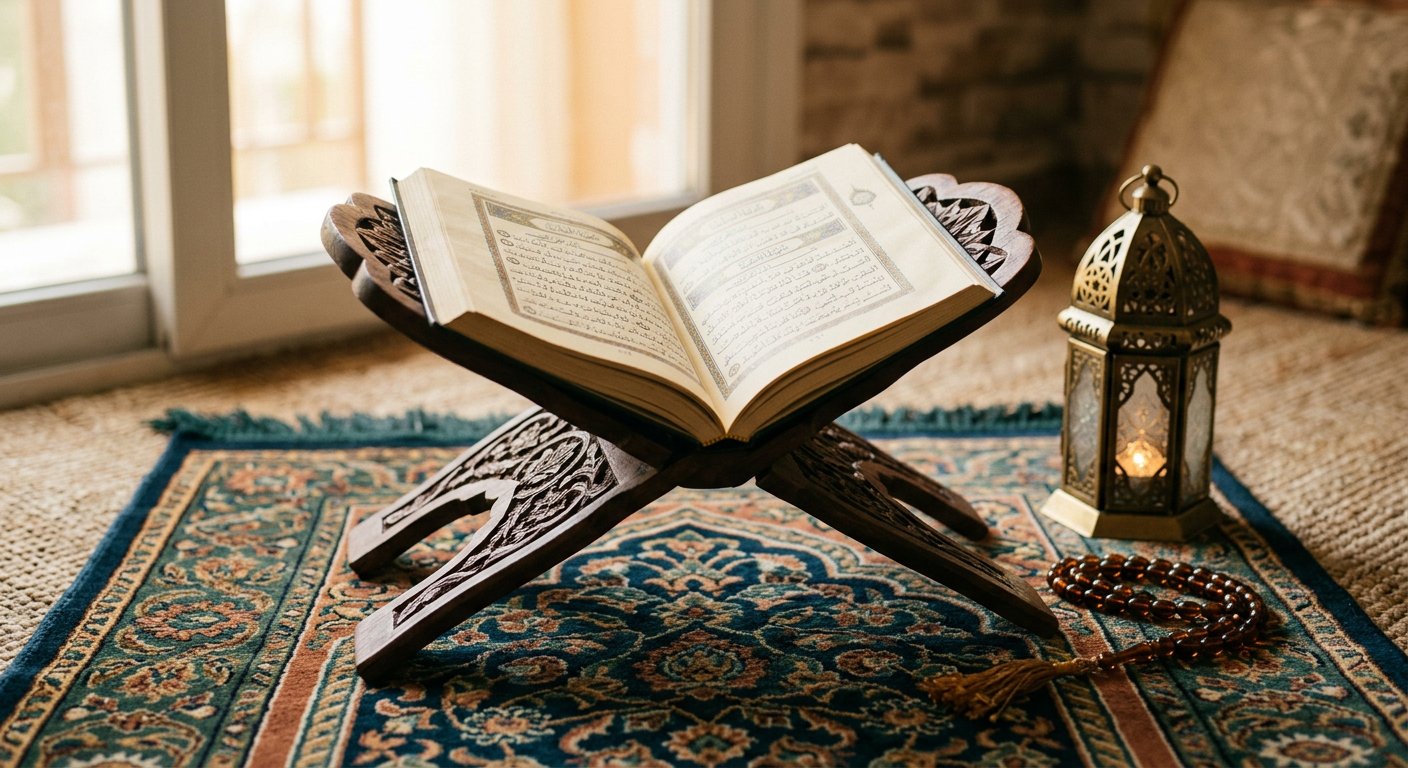
Ramadan is the most blessed month of the Islamic calendar — a month of fasting, prayer, Quran, charity, and spiritual transformation. Every Muslim who witnesses the month is required to fast, and the rewards of this blessed month are beyond measure.
Why is Ramadan Special?
Allah says: "The month of Ramadan [is that] in which was revealed the Quran, a guidance for the people and clear proofs of guidance and criterion." (Surah Al-Baqarah 2:185)
Ramadan is special because:
- The Quran was revealed in this month
- The gates of Paradise are opened
- The gates of Hellfire are closed
- The devils are chained
- Every good deed is multiplied manifold
- It contains Laylat al-Qadr — the Night of Power — better than a thousand months
The Command to Fast
Allah says: "O you who have believed, decreed upon you is fasting as it was decreed upon those before you that you may become righteous." (Surah Al-Baqarah 2:183)
Fasting was not just prescribed for Muslims — it was a universal practice of the prophets before us. Adam, Nuh, Ibrahim, Musa, Dawud, and Isa (peace be upon them all) fasted. Fasting is a means of attaining taqwa (God-consciousness) — the highest goal of a believer.
The Wisdom of Fasting
1. Spiritual Purification
Fasting cleanses the soul. When we abstain from food, drink, and intimate relations from dawn to dusk, we become more aware of our dependence on Allah. The body is humbled, and the spirit is elevated.
2. Self-Discipline
Fasting teaches self-control. When we can resist the natural desires of food and drink — not because they are haram, but because Allah commands it — we develop the discipline to resist sin in all forms.
3. Gratitude
Hunger reminds us of those who go hungry every day. By experiencing a small measure of their struggle, we develop empathy and gratitude for the blessings Allah has given us.
4. Empathy for the Poor
The Prophet ﷺ said: "The strong is not the one who overcomes people by his strength, but the strong is the one who controls himself when angry." (Sahih al-Bukhari) Similarly, the generous is not the one who never feels hungry — but the one who shares despite his own needs.
5. Drawing Closer to Allah
The Prophet ﷺ said: "Fasting is a shield (Jinan)." When we fast sincerely, we create a spiritual barrier between ourselves and sin. Our du'a is more readily accepted, our worship is more heartfelt, and our connection with Allah deepens.
6. Breaking Bad Habits
Fasting is a great opportunity to break harmful habits — overeating, smoking, gossip, anger, and other sins. When we can stop eating during daylight for 30 days, we can stop any other sin permanently.
The Hadith on the Virtues of Fasting
The Prophet ﷺ said: "Whoever fasts during Ramadan out of sincere faith and hoping to attain Allah's rewards, then all his past sins will be forgiven." (Sahih al-Bukhari)
The Prophet ﷺ also said:
- "The smell coming from the mouth of a fasting person is better in the sight of Allah than the smell of musk." (Sahih al-Bukhari and Muslim)
- "Whoever fasts for one day for the sake of Allah, Allah will keep his face away from the Hellfire for a distance of seventy years." (Sahih al-Bukhari and Muslim)
- "There is a gate in Paradise called Ar-Rayyan, through which only those who fasted will enter on the Day of Resurrection. No one else will enter through it. It will be said: 'Where are those who fasted?' and they will enter through it. After they have entered, it will be closed, and no one else will enter through it." (Sahih al-Bukhari and Muslim)
The Rules of Fasting
Suhoor (Pre-dawn meal)
Eating before dawn is a Sunnah and a blessing. The Prophet ﷺ said: "Take Suhoor, for in it there is blessing." (Sahih al-Bukhari and Muslim) Delaying Suhoor until just before Fajr is the Sunnah.
Iftar (Breaking the fast)
Break the fast at Maghrib with dates or water, following the Sunnah. The Prophet ﷺ said: "When one of you is fasting, let him break his fast with dates; if he cannot find dates, then with water, for it is pure." (Abu Dawud and Tirmidhi)
What Breaks the Fast
- Eating or drinking intentionally from dawn to sunset
- Vomiting intentionally
- Menstruation or post-natal bleeding
What Does NOT Break the Fast
- Eating or drinking by mistake or forgetfulness
- Unintentional vomiting
- Swallowing saliva or food stuck between teeth (if small)
- Eye drops, ear drops, injections (most scholars agree these do not break the fast)
Recommended Acts During Ramadan
1. Increase in Quran Recitation
The Quran was revealed in Ramadan. Make it a goal to complete the Quran at least once during the month. Reflect deeply on its meaning.
2. Pray Tarawih (Night Prayer)
The Prophet ﷺ said: "Whoever prays Tarawih during Ramadan out of sincere faith and hoping to attain Allah's rewards, then all his past sins will be forgiven." (Sahih al-Bukhari) Praying Tarawih in congregation is especially rewarding.
3. Give Generously (Sadaqah)
The Prophet ﷺ was the most generous of people, and he was at his most generous during Ramadan. Increase your charity — give to the poor, sponsor an orphan, support your local Masjid.
4. Make Du'a Before Iftar
A fasting person's du'a is accepted at the time of breaking the fast. Make this a special time of sincere supplication to Allah for all your needs.
5. Perform Itikaf (Spiritual Retreat)
The Prophet ﷺ used to perform Itikaf in the last ten nights of Ramadan — staying in the Masjid day and night, dedicating himself entirely to worship. This is a Sunnah for those who can.
6. Seek Laylat al-Qadr
The Night of Power is in the last ten nights, especially on the odd nights (21st, 23rd, 25th, 27th, 29th). The Prophet ﷺ said: "Whoever stands in prayer on Laylat al-Qadr out of sincere faith and hoping for reward, his previous sins will be forgiven." (Sahih al-Bukhari)
7. Feed a Fasting Person
The Prophet ﷺ said: "Whoever feeds a fasting person will have a reward like that of the fasting person, without diminishing the reward of the fasting person in any way." (Tirmidhi)
8. Maintain Family Connections
Ramadan is a time to strengthen family bonds. Invite family and friends for Iftar, share meals, and create beautiful memories of worship together.
The Month of Forgiveness: The Prophet ﷺ said that in every night of Ramadan, Allah calls out: "O seekers of good, come forward! O seekers of evil, desist! And Allah will forgive many people — including those who seek forgiveness in the last night." (Reported by Imam Ahmad)
Common Mistakes to Avoid
- Skipping Suhoor: It is a Sunnah with blessings, even if just a small bite
- Overeating at Iftar: This defeats the purpose of fasting. Eat moderately
- Engaging in Sin: Fasting is meaningless if we lie, gossip, or commit sins during the day
- Missing Tarawih: Pray Tarawih at the Masjid to gain reward for the entire night
- Not Making Du'a: The time before Iftar is precious — use it for sincere du'a
- Argue and fight: The Prophet ﷺ said: "If anyone is fasting, let him not say obscene things or act ignorantly. If someone fights or curses him, let him say: 'I am fasting.'" (Sahih al-Bukhari)
A Final Reflection: Ramadan is a guest that visits us once a year. Will we welcome it with joy, worship, and transformation — or let it pass like any other month? Make this Ramadan your best yet. Fast sincerely, pray fervently, give generously, and emerge from the month as a better Muslim — closer to Allah and more devoted to His cause.